



Choosing 6 min readUpdated 17 September 2026
Best hedging for coastal gardens
The reliable evergreens
Griselinia littoralis is the classic Irish seaside hedge for a reason. Bright glossy apple-green leaves, fast growth of 30–50cm a year once established, and it laughs at salt. It is our default recommendation for any garden within 2km of the sea. Plant at 3 per metre for a hedge, or 1 per metre for a taller screen.
Portuguese laurel (Prunus lusitanica) is slightly slower but a beautiful darker alternative, with elegant red leaf stalks and creamy flower spikes in early summer. More refined than cherry laurel and considerably tougher in wind.
Escallonia macrantha and its cultivars (‘Apple Blossom’, ‘Iveyi’) are old friends of the west coast — flowering pink or white through summer, evergreen, and near-indestructible in salt-laden air. Excellent for a slightly informal hedge to about 2.5m.
Native windbreaks
For a proper native windbreak, nothing beats hawthorn interplanted with blackthorn. Set in a double staggered row at 5 plants per metre, they knit into an impenetrable mesh in three or four seasons and provide habitat, blossom, sloes and haws.
Sea buckthorn (Hippophae rhamnoides) is another underused hero — silver-leaved, thorny, salt-tolerant to the point of thriving on beach dunes, with orange autumn berries. It also fixes nitrogen, quietly improving the ground it grows in.
What to avoid
Beech and hornbeam are magnificent hedges inland but they scorch badly within a mile of open sea. Yew is slow enough that salt damage catches up with it. Leylandii looks fine for five years and then browns out on the windward side and never recovers.
Establishment
Whatever you plant, put in a temporary shelter fence on the seaward side for the first two years. A 1.5m windbreak netting on posts costs very little and doubles establishment speed. A hedge grown up behind a barrier establishes twice as fast as one exposed from day one.
Prepare a proper trench, not individual pits — a continuous strip 40cm wide, forked to relieve compaction. Water in, mulch, and check ties on any staked plants each spring.
Written by the team at Italy Gardens & Nursery, Ballymena, Co. Antrim.
Updated 17 September 2026
More guides
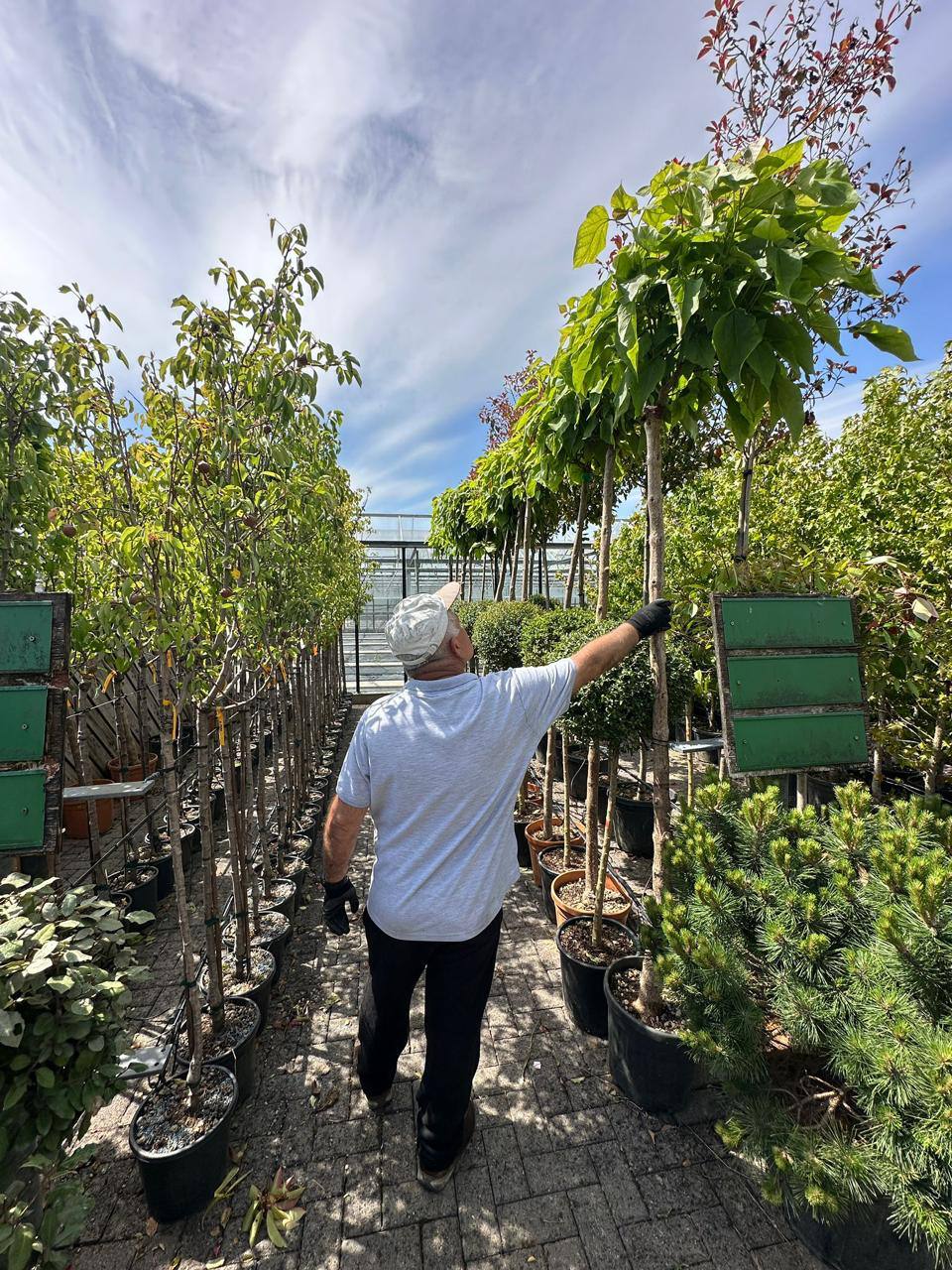
Planting9 min read
How to plant a tree in Irish soil
Heavy, wet ground is what kills most newly planted trees here. A step-by-step guide to planting and the first two years, from a nursery in Co. Antrim.
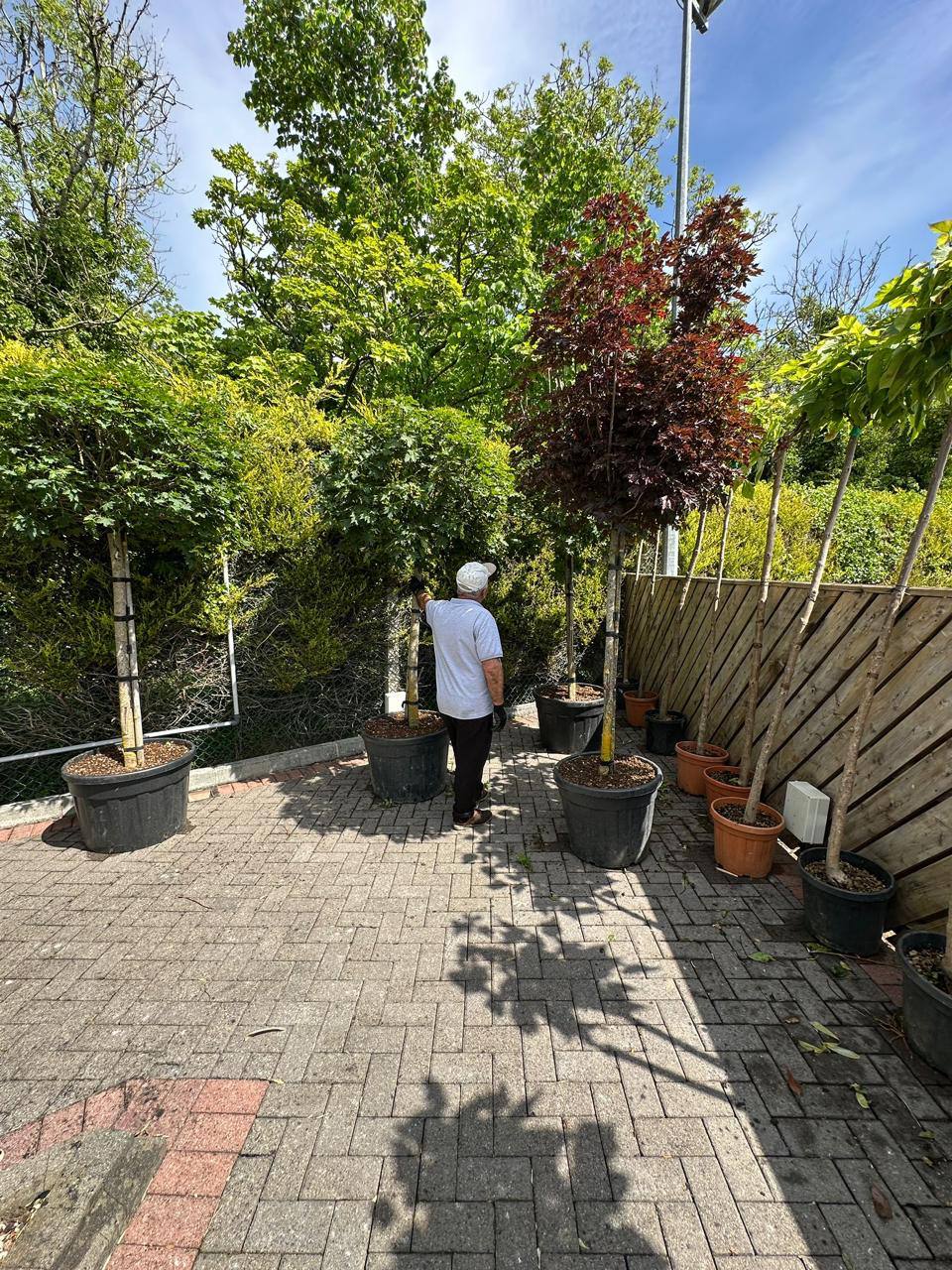
Care5 min read
Olive trees in Ireland — what to know
Yes, you can grow an olive tree in an Irish garden. Here's what to expect, and where they thrive.