



Care 5 min readUpdated 17 September 2026
Olive trees in Ireland — what to know
Drainage first, always
Olives will not tolerate wet feet in winter. The single biggest killer of olive trees in Ireland is not cold but waterlogging in December and January, when clay soils behave like a sponge and roots suffocate.
In the ground, plant on a slight raised mound and mix a generous amount of coarse grit and gravel into the backfill. In a pot, use a very free-draining gritty mix — one part loam-based compost to one part horticultural grit works well — in a container with large drainage holes and a layer of crocks at the base.
Shelter and sun
Site olives out of cold north and east winds. The ideal position in Ireland is against a south or west-facing wall, in a courtyard, or in a sheltered south-facing corner of the garden. They need every hour of sun they can get.
Salt is not a problem — coastal Cork, Kerry and Galway suit olives very well, provided the site is out of the direct blast of the prevailing wind.
What to expect
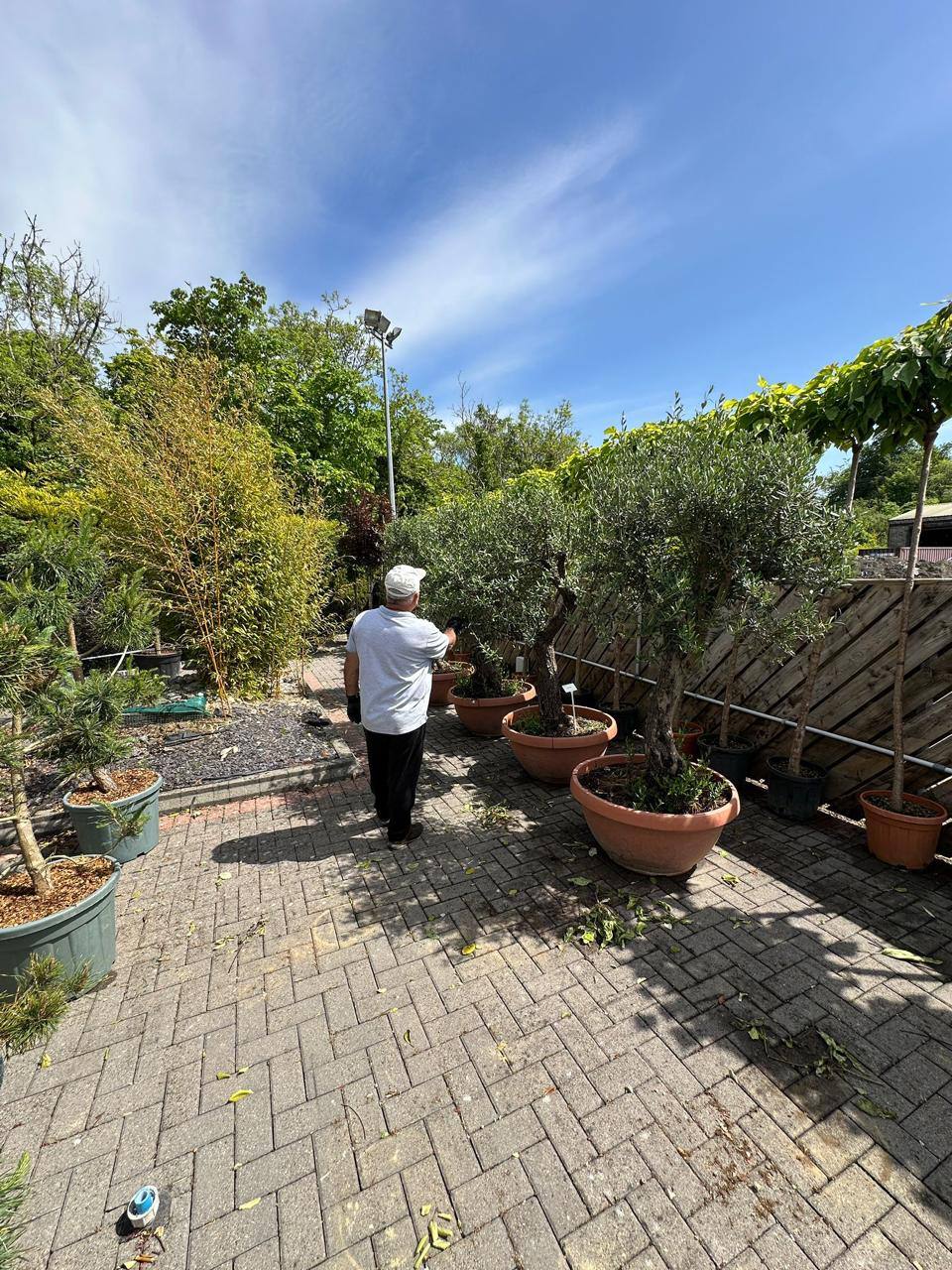
Expect flowers most summers, and in a warm year, small green fruit that may or may not ripen to black. Do not plant an olive for the olives. Plant it for the silver-grey leaves, the character of the twisted trunk, the way it catches the low western light — the sculptural presence of a mature tree in a paved garden is what makes it worth doing.
Growth is slow in Irish conditions — 10 to 15cm a year on an established specimen. This is why we import trees that already have 30, 50 or 80 years of trunk character behind them.
Winter care
Potted olives in colder counties benefit from being moved into an unheated glasshouse or against a south-facing wall from November to March. The tree does not need heat — it just needs to stay a little drier than an open garden allows.
In the ground, in the milder southern and western counties, mature olives are perfectly hardy. Ancient specimens planted in Cork, Kerry and West Waterford have come through the last two decades unscathed, including the cold snaps of 2010 and 2018. In colder inland counties, keep them in pots that can be moved.
Feeding and pruning
Feed once in spring with a low-nitrogen feed — a specialist Mediterranean plant food or a light dressing of seaweed and bonemeal. Overfeeding produces soft growth that the winter then kills.
Prune lightly in April, only to keep the shape open — olives fruit and flower on the previous season's wood, so heavy pruning removes next year's display. Aim for a goblet shape that lets light and air into the centre.
Written by the team at Italy Gardens & Nursery, Ballymena, Co. Antrim.
Updated 17 September 2026
More guides
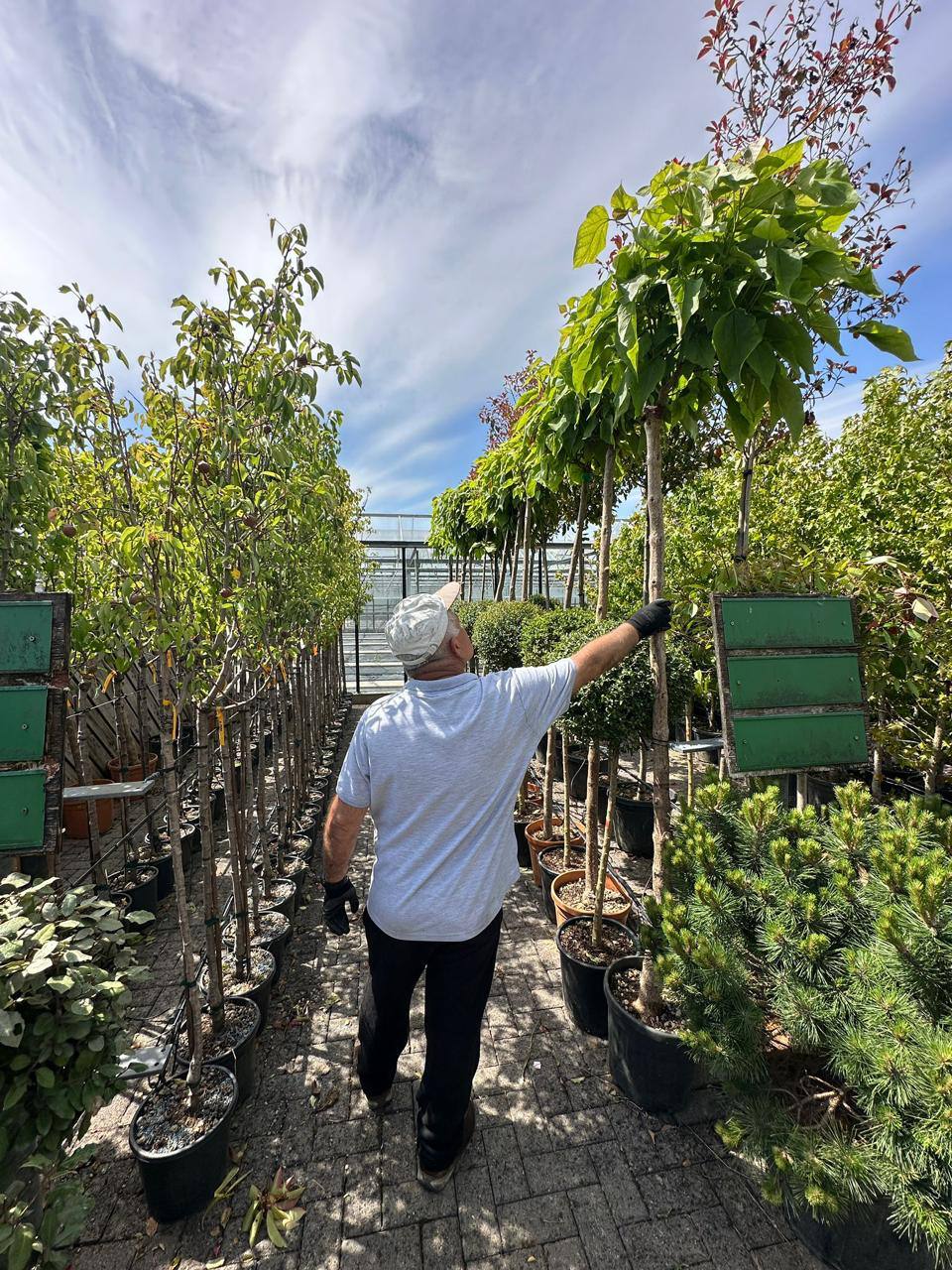
Planting9 min read
How to plant a tree in Irish soil
Heavy, wet ground is what kills most newly planted trees here. A step-by-step guide to planting and the first two years, from a nursery in Co. Antrim.
Choosing6 min read
Best hedging for coastal gardens
Salt spray, prevailing wind and shallow soils — the seaside is a hard place to grow a hedge. These are the ones that will not let you down.